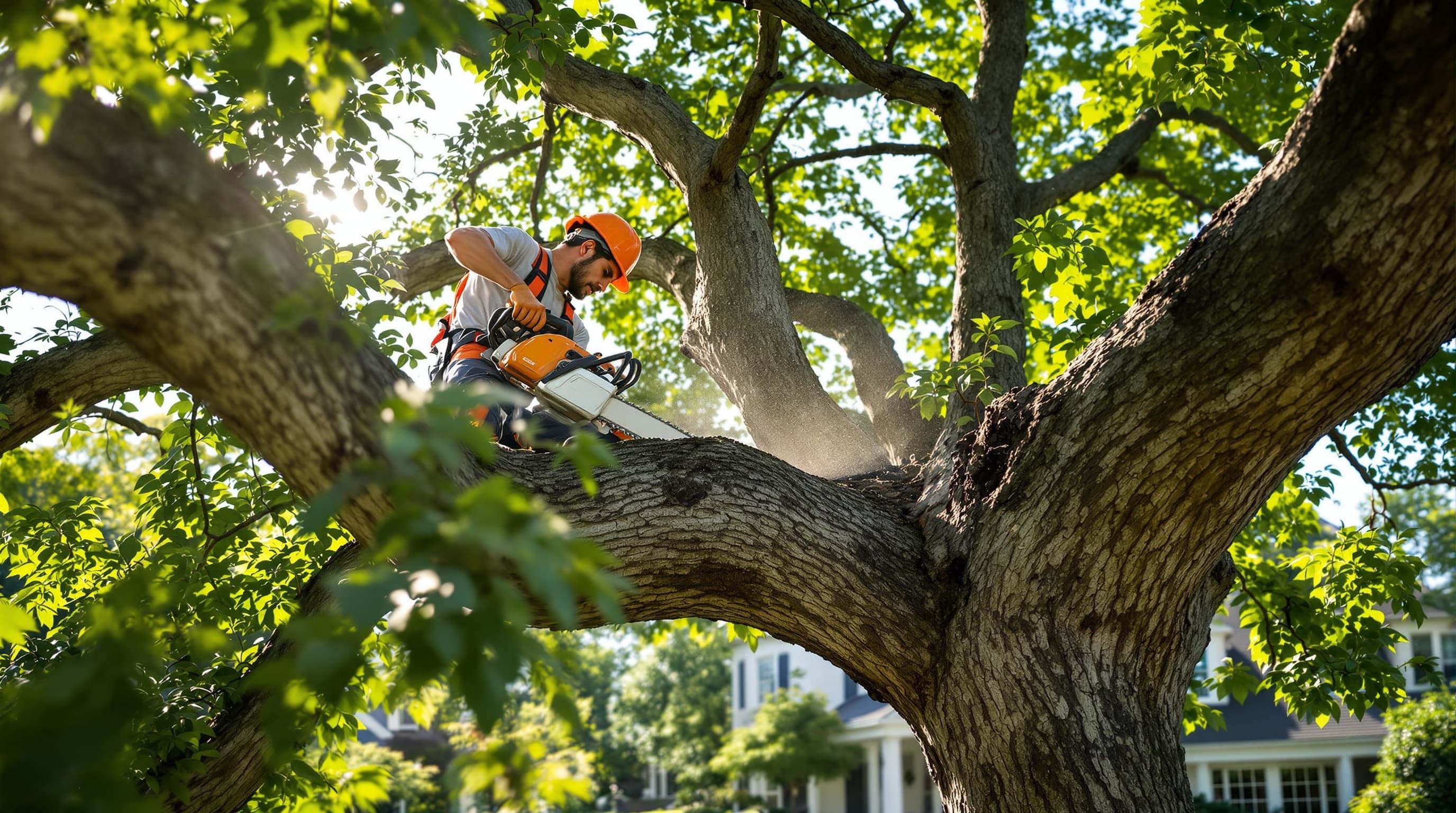
For most trees on Long Island, the best time for tree trimming is late winter. That usually means February and March, before the buds open. There are a few exceptions. Oaks, flowering trees and storm-damaged limbs each follow their own timing.
This guide covers when to trim the trees most common on Long Island. It also covers the work that should not wait for any season.
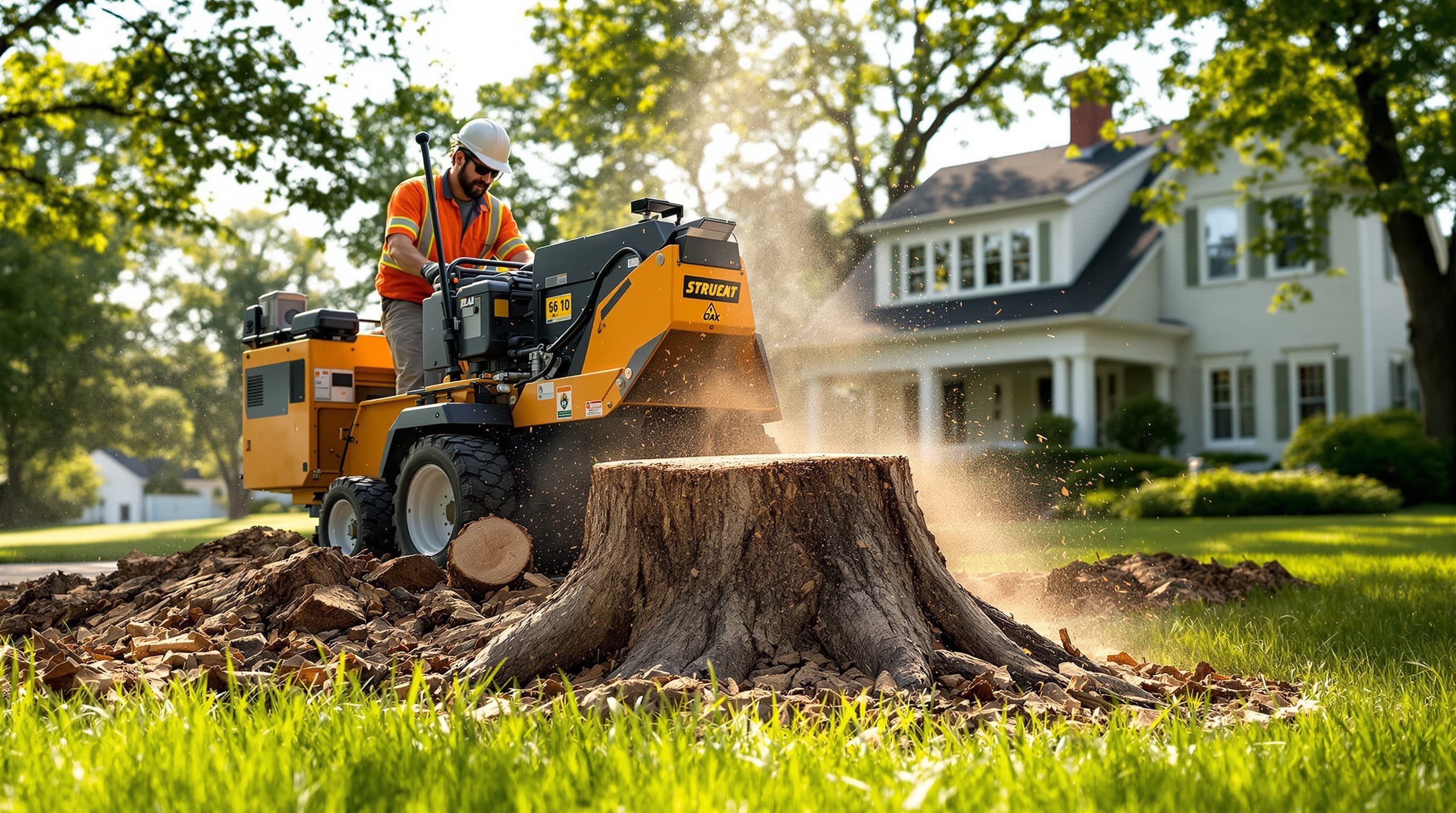
Why late winter is the best time to trim trees
Most Long Island shade trees drop their leaves and go dormant in winter. A dormant tree handles pruning cuts with less stress. When growth starts in spring, the tree begins closing those cuts right away.
Bare branches also make the work more precise. With the leaves gone, dead wood and crossing limbs are easy to spot. Weak branch unions are easier to see too. Each cut can be planned before it is made.
Many insects and tree diseases are also less active in the cold. Fresh cuts made in late winter face less risk of infection than cuts made in spring.
When to trim oak trees on Long Island
Oaks need the most care with timing. Oak wilt is a fungal disease that kills oak trees. It has been found on Long Island.
Beetles spread oak wilt to fresh wounds in spring and early summer. New York State advises against pruning oaks from April through July. If an oak must be cut in those months, cover the wound with tree wound paint right away.
The safest time to trim an oak is late winter, while the tree is dormant.
When to trim maples and birches
Maples and birches often drip sap when they are cut in late winter. This is called bleeding. It looks alarming, but it does not harm the tree.
If the dripping bothers you, trim these trees in early summer instead. By then the leaves are fully open and the sap flow has slowed. Either timing is fine for the tree.
When to trim flowering trees
Spring-flowering trees like magnolias and redbuds set next year's flower buds the summer before. If you trim them in winter, you cut off many of those buds. For the most flowers, do light shaping right after the blooms fade.
Trees that bloom in summer work the other way. Crape myrtle and rose of Sharon flower on new growth. Trim them in late winter, before that growth starts.
When to trim evergreens
Pines, spruces and hollies are best trimmed in late winter or early spring. Aim to finish before the new growth begins.
Keep cuts on evergreens light. Most pines and spruces will not grow new shoots from bare wood. A branch cut back too far often stays bare for good.
Tree trimming that should not wait
Some work cannot wait for the right season. Dead, cracked or hanging branches should come down as soon as you spot them. A broken limb can fall on a roof, a car or a person without warning.
Storms are the other reason to act early. Long Island gets nor'easters in the colder months and tropical storms in late summer and fall. Atlantic hurricane season runs from June 1 through November 30. Early summer is a good time to have weak limbs over the house checked.
If a storm has already brought a limb down, here is what to do in a tree emergency.
Branches near power lines
Never trim near power lines yourself. Touching a line can be deadly. So can getting too close to one. Stay at least 10 feet away from any overhead line.
PSEG Long Island clears trees around its power lines. Call them about branches that touch or rest on the wires. For the line that runs from the pole to your house, call PSEG before any tree work near it.
How often trees need trimming
Most trees do not need trimming every year. Young trees do well with light pruning every two to three years. That early work sets up a strong branch structure.
Mature shade trees usually need attention every three to five years. Trees that hang over a roof or driveway may need it more often. A common rule is to remove no more than a quarter of a tree's live branches in one year.
Do you need a permit to trim a tree on Long Island?
Trimming a tree on your own property usually does not need a permit. Some villages do have their own tree rules. Trees along the street are often owned by the town or village. Ask them before you cut one.
Our guide to tree removal permits on Long Island covers the local rules in more detail.
What tree trimming costs
The price depends on the tree's height and how close it is to the house or wires. How much wood comes out matters too. A small ornamental tree may cost a few hundred dollars. A tall oak over a roof can run well over $1,000.
Winter is often a slower season for tree crews, so scheduling can be easier. Ask for a written quote that lists which branches come off. It should also say who hauls away the wood.
Getting your trees trimmed
If you are not sure what your trees need, have someone look at them before you book the work. We offer tree trimming service across Nassau and Suffolk County. For fruit trees and shade trees that need careful shaping, see our tree pruning service.
On the North Shore, see our Huntington tree pruning services. In central Suffolk, we also handle tree trimming in Brentwood.
Call (631) 625-8784 to ask for a free estimate.
Frequently Asked Questions
Is it bad to trim trees in the fall?
Fall is usually the worst time for heavy trimming. Many decay fungi spread their spores in fall. Cuts also close more slowly as the tree slows down for winter. Removing dead or dangerous branches is fine at any time.
Can I trim a tree in summer?
Yes, light trimming in summer is fine for most trees. Dead branches are easy to spot next to leafy ones. Just skip oaks until August because of the oak wilt risk.
Should I trim a tree myself?
Small branches you can reach from the ground are fine to trim yourself. Anything that needs a ladder or a chainsaw is a job for a trained crew. So is any work near wires.