Nassau & Suffolk County
Tree Pruning Long Island
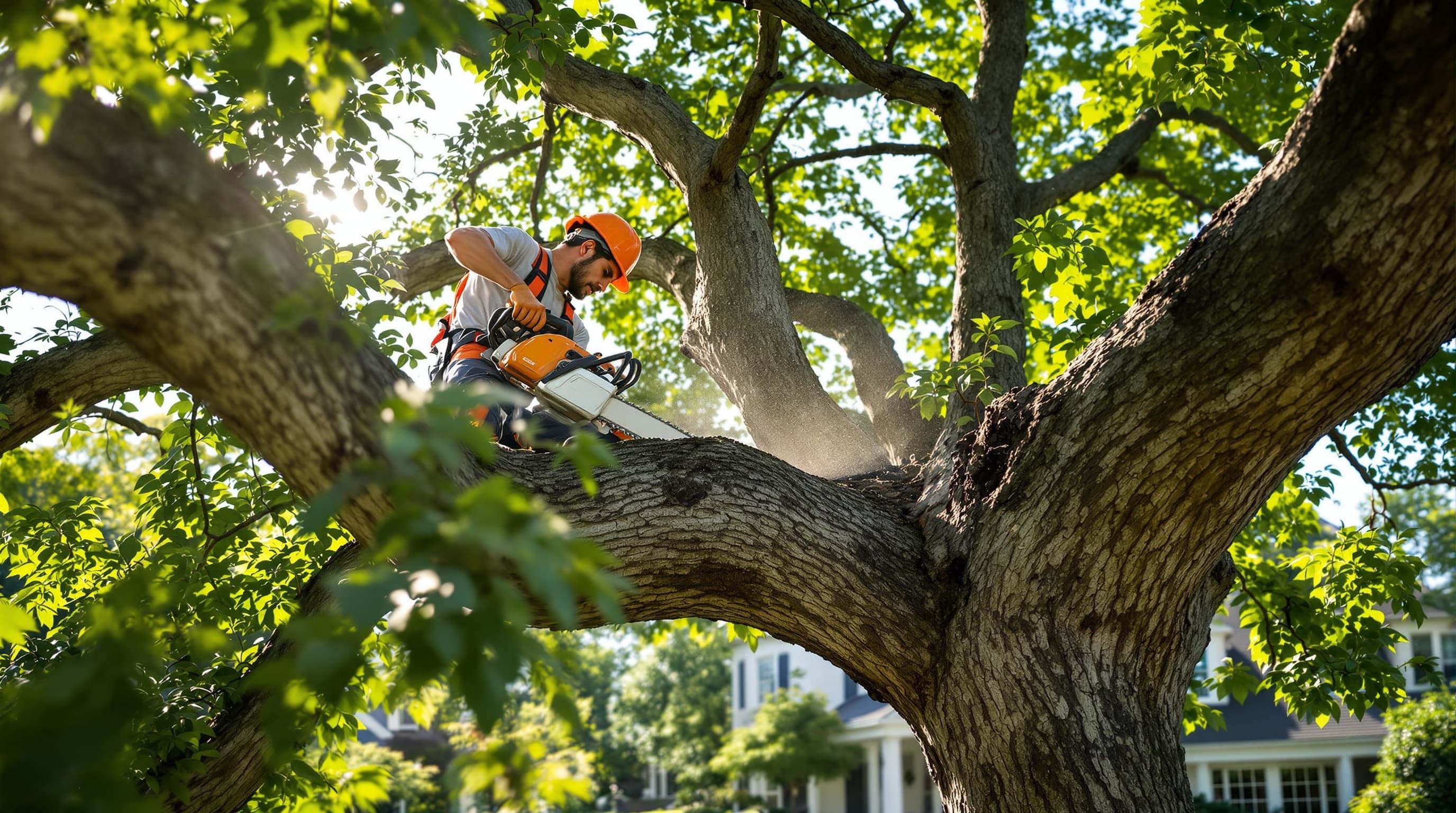
Proper pruning by ISA-certified arborists extends tree life, prevents disease, and builds better structure. The right cut in the right place makes all the difference.
Pruning that improves long-term health
Pruning isn't just cutting branches. It's making strategic decisions about which branches to remove, where to cut, and how the tree will grow afterward. Done correctly by an ISA-certified arborist, it strengthens the tree. Done incorrectly, it causes irreversible damage.
We never top trees. We never leave stubs. We make every cut at the right location — at a lateral branch or the branch collar — using the pruning techniques that the International Society of Arboriculture recommends and that actually work for the tree's long-term health.
Structural pruning
Shape young trees to build a strong central leader and well-spaced scaffold branches. The most important pruning you'll ever do — and the hardest to fix later if skipped.
Crown cleaning
Remove dead, dying, diseased, and crossing branches. Improves airflow and light penetration through the canopy, reducing disease pressure.
Deadwood removal
Dead branches are a safety hazard and an entry point for decay and disease. We remove them cleanly before they become a larger problem.
Disease prevention pruning
Targeted removal of infected tissue — Dutch elm disease, fire blight, oak wilt — at the right time and with proper sanitation between cuts to stop spread.
Fruit tree pruning
Annual dormant pruning to maintain productivity: open centers, remove water sprouts, encourage fruiting spur development. Apple, pear, peach, cherry.
Vista pruning
Open specific sightlines through the canopy while preserving overall tree health. Balances views with structure.
Why we don't top trees
Topping — removing large portions of the main trunk and branches — is one of the most harmful practices in the tree care industry. It causes rapid regrowth of weak, poorly attached branches, makes trees more hazardous, and shortens their lifespan dramatically. If a company offers to top your tree, find a different company. ISA certification means we know better.
Frequently asked questions
What's the difference between pruning and trimming?+
Pruning is a targeted arboricultural practice — removing specific branches to improve health, structure, or safety. Trimming is typically about shaping and aesthetics. Pruning requires knowledge of tree biology: where to cut, how much to remove, and how the tree will respond. An ISA-certified arborist handles pruning; anyone with a chainsaw can trim.
When is the best time to prune trees on Long Island?+
Late winter (February–March) is ideal for most species — the tree is dormant, wounds close fast as growth resumes, and with leaves off you can see the structure clearly. That said, diseased, dead, or hazardous branches should be removed year-round regardless of timing.
How much of a tree can be pruned at once?+
ISA standards recommend removing no more than 25% of a tree's live canopy in a single year. Removing more stresses the tree and triggers excessive regrowth (water sprouts) that weakens structure over time. Any service that offers to 'top' your tree is doing it wrong.
Do you prune fruit trees?+
Yes. Fruit trees — apple, pear, peach, cherry — require annual dormant pruning to maintain productivity and control disease. The technique differs significantly from shade tree pruning. We prune fruit trees properly: open centers, remove crossing branches, encourage fruiting spurs.
Who does tree pruning near me on Long Island?+
Long Island Tree Pros provides tree pruning near you throughout Nassau and Suffolk County. We are ISA-certified arborists based in Huntington, serving all of Long Island with licensed and insured crews. Whether you are searching for tree pruning near me in Smithtown, Hempstead, Babylon, Oyster Bay, or any other LI town, we dispatch daily from Huntington. Call (631) 625-8784 for a free estimate — same-week availability in most areas.
How much does tree pruning near me cost in Nassau or Suffolk County?+
Tree pruning near me on Long Island ranges from $200–$1,200 for a typical residential tree, depending on the height, species, and number of branches to be removed. Orchard or fruit tree pruning runs $150–$400. Structural crown reduction on a mature oak or maple (40+ feet) runs $600–$1,200. We provide written quotes on-site before any work starts — no surprises.
Do you need an arborist or a tree service?
For disease diagnosis, risk assessments, and permit-required written reports, an ISA-certified arborist is the right call. We explain the full difference — ISA certification, TRAQ, permit requirements by town — in our Long Island arborist guide.
Read: Arborists on Long Island — What they do, when you need one, and what it costs →Recent pruning jobs
Tree Pruning
Annual pruning and canopy shaping — 7 large oaks, 2 maples
Hempstead · 2026-02-10
Get your free estimate
We respond within 2 hours during business hours.
Schedule your tree pruning
Free estimate. Nassau & Suffolk County.